

Logistics Cost Management: How to Build the Internal Business Case for a 4PL in an E&P Operation
When an E&P operator evaluates a 4PL for bulk field logistics, the cost comparison has to account for more than the trucking rate. Sand, proppant, and other wellsite material still have to move from source or loadout to the pad, and the carrier still gets paid either way. What changes is who manages that movement and what the operator spends to keep material supply aligned with the completion schedule. That management work is easy

Freight Management for Bulk Transportation: How to Scale Volume Without Scaling Overhead
A CFO evaluating transportation growth wants to know one thing first: does cost-to-serve hold steady as volume climbs, or does it climb right along with it? The freight rate is the easy part of that math. The harder part is everything that happens after a load is booked, and whether anyone is actually watching it. The VP of Logistics is asking something different. Can that same growth happen without losing visibility into execution? A scalable

Inside LogistixIQ’s AI-Enabled Platform: Predicting Risk Across Transportation Operations
Most transportation operations can tell you where a truck is. That doesn’t necessarily mean they can tell you which job is about to have a problem. A truck may be sitting longer than expected at a source, or a carrier may be running fewer loads than it committed to. Inventory may still look healthy on the screen even though the site is burning through material faster than incoming trucks can replace it. None of those

How Does the Concept of Flow Work for Frac Sand Delivery?
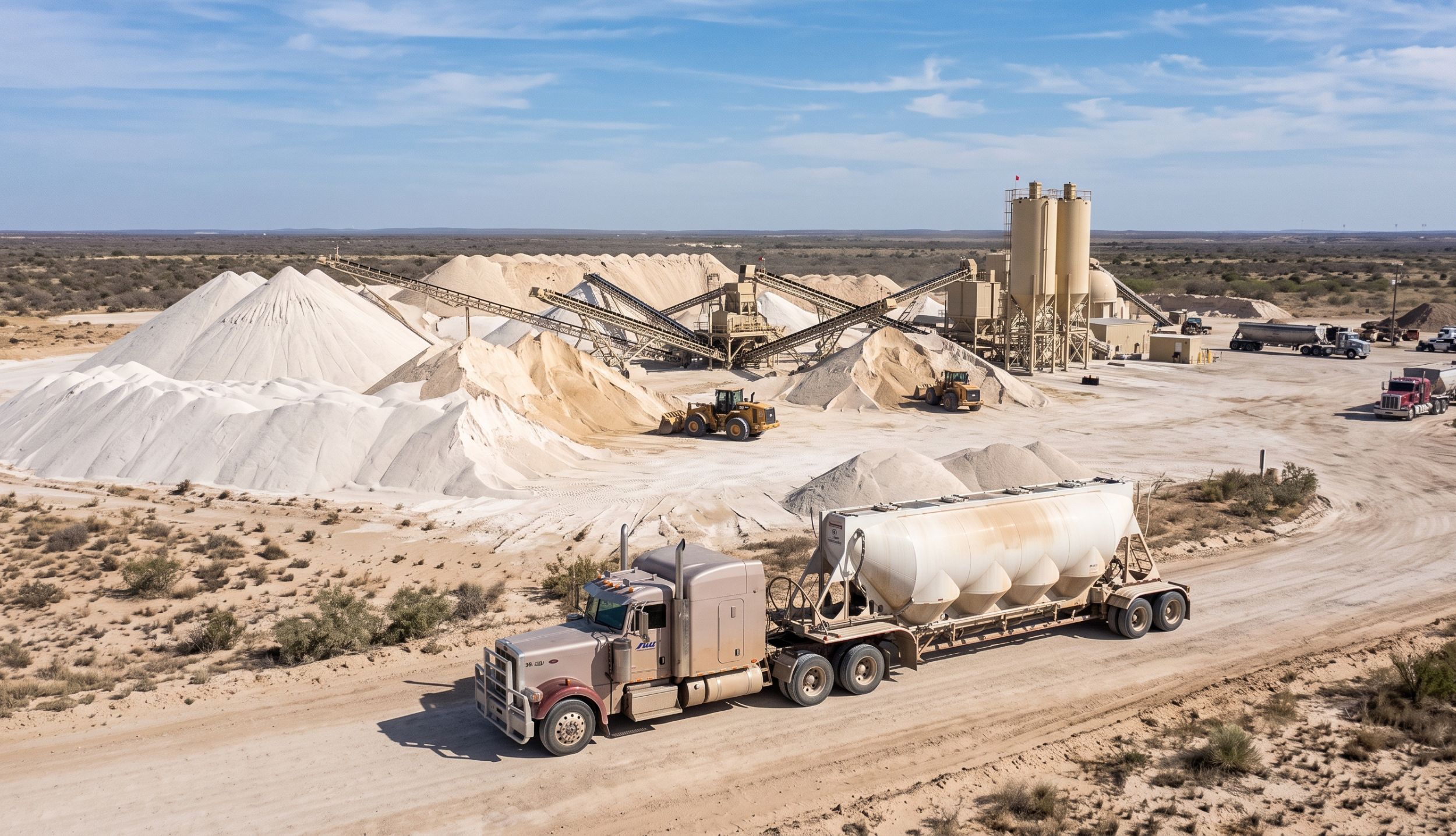
Flow in frac sand delivery is the continuous, synchronized movement of proppant from the mine to the blender at a rate that matches the well site’s real-time consumption, so the last load arrives exactly when the frac crew needs it. When sand flows correctly, pumps never wait on material and trucks never queue idle on the pad. When flow breaks, the well goes down, and non-productive time (NPT) starts billing at thousands of dollars per

4PL Logistics vs. Standalone Logistics Software: Why Bulk Operators Are Making the Switch
The platform is running. Loads are visible on the dashboard. Invoices are queuing. And the VP Supply Chain is still fielding calls at 7 PM about a carrier that did not show and a site that is waiting. This is the scenario the average logistics software is not designed to prevent. It surfaces the problem. It does not solve it. For bulk operators managing high load volumes across multiple sites and carriers, that gap between

5 Myths About Oilfield Services Logistics That Are Quietly Draining Your Margin
Oilfield services logistics costs are often underestimated because most operators measure them at the load level instead of across the full system. What appears manageable in isolation compounds over time, impacting margin, cash flow, and capital efficiency in ways that are rarely visible in day-to-day operations. Every oilfield services operation runs on a set of assumptions about logistics. Some are incomplete. Others are wrong. The gap between those assumptions and how logistics actually performs is